Rust From the Inside Out: How a Corroding Fuel Tank Quietly Wrecks Your Engine
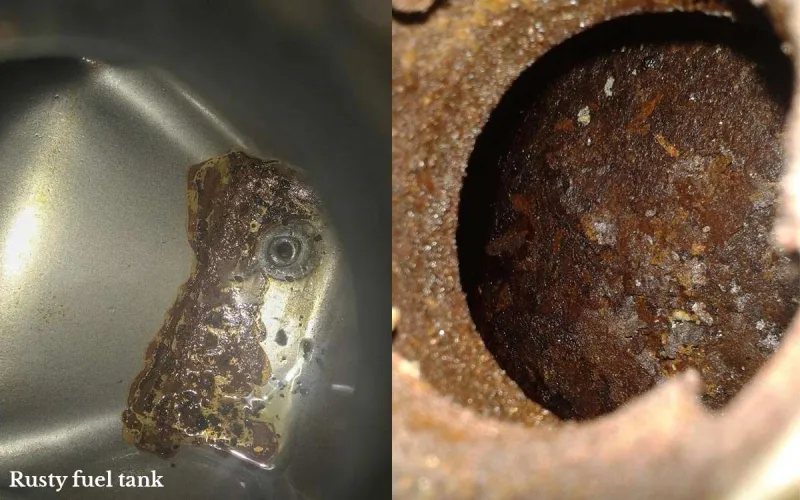
Photo: rusty steel fuel tank interior corrosion sediment, via www.claspauto.com
You check your oil. You rotate your tires. Maybe you even keep up with your air filter. But when's the last time you thought about what's going on inside your fuel tank?
For most truck and car owners, the answer is never — and that's exactly the problem. Internal tank corrosion is one of those slow-burn issues that doesn't announce itself with a warning light or a loud noise. It just quietly does its damage over months and years, sending rust particles and gunk downstream toward your injectors, fuel pump, and eventually your engine. By the time you notice something's off, you could be looking at a repair bill that makes your stomach drop.
Let's break down what's really happening in there, how to spot the signs early, and what you can do to protect your investment.
What Causes a Fuel Tank to Rust From the Inside?
Steel fuel tanks — which are still common on older trucks, classic cars, and plenty of working vehicles on American roads today — are vulnerable to oxidation in ways most owners don't fully appreciate. The culprit? Moisture.
Here's the basic chemistry: when a tank isn't completely full, there's air in the empty space above the fuel. That air contains water vapor. Over time, especially with temperature swings (think a hot Texas afternoon followed by a cool night), that moisture condenses on the interior walls of the tank. Water and steel don't mix well. Oxidation — rust — begins to form.
Ethanol-blended fuels, which dominate the US market today, make this worse. Ethanol is hygroscopic, meaning it actively attracts and absorbs water from the surrounding environment. So if you're running E10 (which you almost certainly are, since it's the standard at most US gas stations), your fuel is pulling in more moisture than straight gasoline would.
Over time, that rust flakes off. Those flakes — along with other sediment like dirt, varnish deposits from old fuel, and microbial growth — settle at the bottom of your tank and get pulled into the fuel system every time you run the pump.
Warning Signs You Shouldn't Ignore
The tricky part about internal tank corrosion is that the symptoms often mimic other problems. Here's what to watch for:
Rough idle or engine hesitation. When rust particles and sediment clog your fuel filter or start sneaking past it, your engine doesn't get a consistent fuel supply. You'll feel it as a rough, uneven idle or a noticeable stumble when you accelerate.
Stalling, especially at low speeds. A partially blocked fuel filter or a struggling fuel pump can cause your engine to stall — often at the worst possible moment, like pulling into traffic.
Declining fuel economy. If your mpg has dropped and you haven't changed your driving habits, a compromised fuel delivery system could be the reason. Your engine is working harder to compensate for inconsistent fuel flow.
Discolored fuel or visible debris. If you ever drain a small sample from your tank and notice it looks murky, brown, or has visible particles floating in it, that's a red flag you shouldn't ignore.
Frequent fuel filter clogging. Replacing your fuel filter more often than usual? That filter is doing its job — but it's also telling you there's something upstream generating a lot of debris.
The Downstream Damage Nobody Talks About
Here's where things get expensive. Your fuel filter is your first line of defense, but it's not perfect. Fine rust particles and varnish deposits can slip through, especially as the filter ages. Once they're past the filter, they head straight for your fuel injectors.
Modern fuel injectors have incredibly tight tolerances — we're talking openings measured in microns. Even tiny particles can cause an injector to spray unevenly or stick partially open or closed. The result? Poor combustion, misfires, and long-term engine wear.
In worst-case scenarios — particularly in trucks and older vehicles with high-volume fuel systems — sediment can accelerate wear on the fuel pump itself, leading to pump failure. A fuel pump replacement is rarely cheap, and if you're driving a diesel pickup or a fleet vehicle, you're looking at serious downtime on top of the parts and labor.
Prevention Strategies That Actually Work
The good news is that internal tank corrosion is largely preventable with some straightforward habits.
Keep your tank fuller, more often. This is the simplest and most underrated tip. A full tank leaves less room for air — and therefore less opportunity for moisture to condense on the tank walls. Running on a quarter tank all the time might feel like you're saving trips to the pump, but you're giving corrosion a head start.
Use a quality fuel stabilizer if the vehicle sits. Seasonal vehicles, weekend trucks, classic cars — anything that doesn't get driven regularly is at serious risk. Fuel left sitting for more than 30 days begins to degrade and leave varnish deposits. A good fuel stabilizer slows that process and protects the tank interior.
Change your fuel filter on schedule. Check your owner's manual and stick to it. A clogged filter doesn't just hurt performance — it puts extra strain on your fuel pump and tells you something upstream needs attention.
Consider a fuel system cleaner periodically. Quality fuel system additives can help dissolve varnish deposits and keep injectors running cleanly. They're not a miracle cure for advanced corrosion, but as part of a regular maintenance routine, they're worth the few bucks.
When It's Time to Call in the Pros
If you're already seeing the warning signs we mentioned — rough idle, stalling, debris in the fuel — it's time to go beyond DIY. A professional fuel tank cleaning service can flush out sediment, inspect the tank interior for active corrosion, and assess whether the tank can be treated or needs replacement.
For steel tanks with significant rust, a tank sealer or liner can sometimes extend the tank's life by coating the interior and preventing further oxidation. It's a legitimate option for classic trucks and older vehicles where a new tank isn't practical or affordable.
For modern vehicles with plastic tanks, internal corrosion isn't the concern — but sediment and microbial growth still are, especially if the vehicle has been sitting or has seen a lot of water contamination.
Don't Wait for a Breakdown to Think About Your Tank
Your fuel tank is the starting point of your entire fuel system. Everything downstream — the pump, the filter, the injectors, the engine — depends on clean fuel coming out of that tank. A little attention now, whether it's keeping the tank full, staying on top of filter changes, or scheduling a professional inspection, can save you from a very costly surprise down the road.
At Top Tank Up, we say it all the time: what's in your tank matters as much as what's under your hood. Don't let rust be the thing that takes your vehicle off the road.