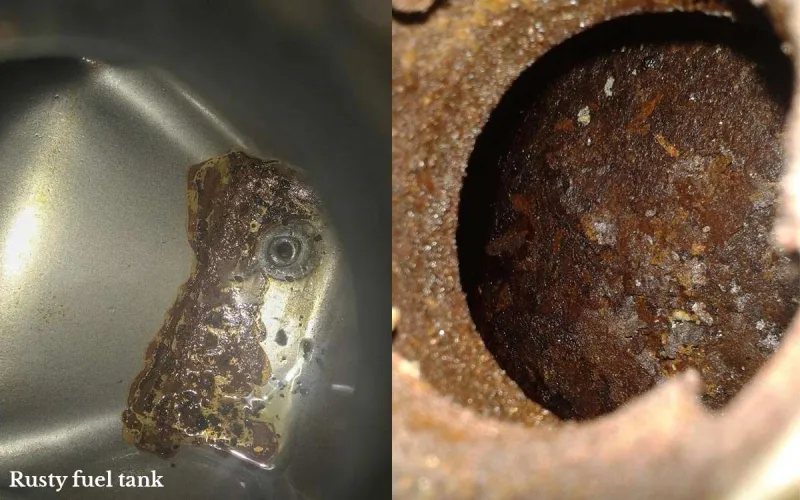
Ethanol and Your Tank: A Slow Burn You Probably Don't See Coming
Next time you pull up to the pump, take a look at that small sticker near the nozzle. Chances are it says something like "Contains up to 10% ethanol." Most of us shrug and squeeze the handle anyway. But that 10% — the stuff that makes E10 the standard blend at virtually every gas station across the US — is doing something inside your fuel tank that's worth paying attention to.
It's not dramatic. There's no warning light, no sudden breakdown, no obvious moment where things go wrong. It's more of a slow burn. And by the time you notice the symptoms, the damage has usually been building for months or even years.
Why Ethanol and Water Are Basically Best Friends
Here's the core problem: ethanol is hygroscopic. That's a fancy way of saying it actively pulls moisture out of the surrounding air. Every time your gas cap comes off, every time temperature swings cause condensation inside the tank, ethanol is there to soak it up.
In small amounts, this isn't catastrophic. The water-ethanol mixture stays blended with the gasoline and passes through your fuel system without separating out. But there's a tipping point — and once you cross it, things get messy fast.
When too much water gets absorbed, the ethanol and water literally drop out of the gasoline mixture and sink to the bottom of your tank. This is called phase separation, and it's one of the more destructive things that can happen in a fuel system. You end up with a layer of ethanol-water slop sitting at the bottom, and a tank of gasoline above it that's now leaner than it should be. Your fuel pump pulls from the bottom — meaning it's feeding that corrosive, water-heavy mixture straight to your injectors and engine.
Older Vehicles Take the Hardest Hit
If you're driving something built before the mid-1990s, or if you own a classic car, a vintage truck, or any older boat or small engine equipment, the ethanol problem is significantly worse for you.
Older fuel system components — rubber hoses, gaskets, certain plastics — weren't designed with ethanol in mind. Ethanol is a solvent. It degrades those materials over time, causing them to swell, crack, or break down entirely. You can end up with fuel leaks, failing seals, and contamination from the degraded materials themselves circulating through the system.
Steel tanks in older vehicles are also more vulnerable. Modern tanks are typically made from high-density polyethylene or treated steel, but older ones corrode more readily — especially when you factor in the water that ethanol drags in. Rust forms on the interior walls, flakes off, and joins the fuel supply. (That's a whole other problem we'll get into another time.)
Seasonal Storage Is Where Phase Separation Gets Dangerous
Spring and fall are when we hear the most fuel system horror stories at Top Tank Up, and it's not a coincidence. Seasonal storage is the perfect storm for ethanol-related damage.
Think about what happens when you park a motorcycle, a lawn tractor, a boat, or even a second vehicle for the winter. The fuel sits. Temperatures swing dramatically. Condensation builds inside the tank. The ethanol keeps absorbing moisture the whole time. By the time spring rolls around and you try to fire it up again, the fuel in that tank may have already phase-separated — meaning that nasty ethanol-water layer has been sitting against the bottom of your tank for months.
Gasoline also degrades on its own over time, typically starting around 30 days. Ethanol blends tend to go stale even faster than pure gasoline. What you've got after a long storage period is old, degraded fuel with a corrosive water layer — not exactly a recipe for a smooth startup.
What You Can Actually Do About It
The good news is that ethanol-related damage is largely preventable if you stay ahead of it. Here's what actually works:
Use a fuel stabilizer before storage. This is the single most effective step for any vehicle that's going to sit for more than a month. A quality fuel stabilizer slows oxidation, helps prevent phase separation, and keeps the fuel viable much longer. Add it before the vehicle goes into storage, run the engine for a few minutes to circulate it through the system, then top off the tank. A full tank leaves less air space for moisture to accumulate.
Consider ethanol-free fuel when available. For small engines, classics, and stored vehicles, ethanol-free gas (sometimes called recreational fuel or non-oxygenated gas) is worth the extra cost. It eliminates the water-absorption issue entirely. Many marinas and some gas stations carry it — look for "ethanol-free" or "E0" labeling.
Inspect rubber fuel lines and seals periodically. On older vehicles especially, check for brittleness, cracking, or swelling. If your fuel hoses look like they've seen better days, replace them with ethanol-compatible materials before a small issue becomes a fuel leak.
Don't let the tank sit nearly empty. A half-empty tank has more air volume, which means more opportunity for condensation and moisture buildup. If you're parking a vehicle for a few weeks, topping off the tank first is a simple habit that pays off.
Drain the tank for very long storage. For equipment sitting more than six months — think classic cars, seasonal ATVs, or older outboard motors — draining the tank completely and running the carburetor or injectors dry is often the cleanest solution.
The Bottom Line
Ethanol isn't going away. It's baked into the US fuel supply, and for most daily drivers in modern vehicles, it's a manageable reality. But "manageable" is the key word. It requires a little awareness and some basic maintenance habits — especially if you own older vehicles or anything that spends time in storage.
Your tank is the foundation of your entire fuel system. Keep it clean, keep it full when it sits, and don't let ethanol work against you quietly for years before you notice the bill. A little attention now saves a lot of headache — and a lot of money — down the road.