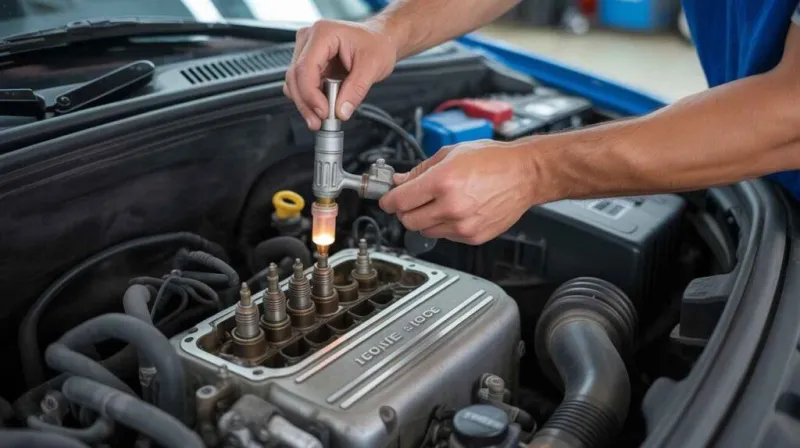
Stop Guessing, Start Saving: Which Fuel System Upgrades Are Actually Worth Your Money
Walk into any auto parts store and you'll find an entire aisle dedicated to making your fuel system "better." Additives, upgraded filters, performance injectors, inline fuel pumps — the options are overwhelming, and the marketing language is aggressive. Every product promises more power, better mileage, and a longer engine life. Some of them are right. A lot of them aren't.
At Top Tank Up, we're not here to sell you something you don't need. We're here to help you figure out what actually moves the needle on your truck or car's fuel system — and what's basically just expensive hope in a bottle. So let's get into it.
The Real Cost of Doing Nothing
Before we talk upgrades, it's worth framing why this matters at all. A neglected fuel system doesn't fail dramatically — it degrades quietly. You lose a fraction of a mile per gallon here, a slight hesitation on startup there. Over months and thousands of miles, those micro-losses stack up into real money.
The average American drives about 14,000 miles per year. If a clogged fuel filter or gunked-up injectors are costing you just 1 MPG on a vehicle that gets 25 MPG, you're burning through roughly 22 extra gallons of gas annually. At current national average prices hovering around $3.50 a gallon, that's $77 a year — just from doing nothing. That number climbs fast if you're driving a truck or a larger SUV with a thirstier engine.
Now let's look at what actually helps.
High-Flow Fuel Filters: Low Cost, High Return
This is probably the easiest win on the list. A quality high-flow fuel filter — the kind that replaces your factory unit with a finer mesh and higher dirt-holding capacity — typically runs between $15 and $60 depending on your vehicle. Installation is a DIY job on most trucks and older cars, taking maybe 20 minutes.
The return? A clean filter maintains proper fuel pressure to your injectors, which keeps combustion efficient. Studies on fuel system efficiency consistently show that restricted fuel flow contributes to incomplete combustion and increased fuel consumption. Replacing a severely clogged filter has been shown to improve fuel economy by 2–4% in high-mileage vehicles.
On a truck averaging 18 MPG and driving 15,000 miles a year, a 3% improvement saves about 25 gallons annually — roughly $87 at current prices. The filter pays for itself in under a year. This one's a no-brainer.
Verdict: Do it. Do it now.
Fuel Injector Cleaners: Useful, But Read the Label
Injector cleaners are the most debated product in the fuel aisle. The truth is nuanced: they work, but not all of them work equally well, and they're not a substitute for actual mechanical cleaning if your injectors are seriously fouled.
Polyetheramine (PEA)-based cleaners are the real deal. Brands like Chevron Techron and Liqui-Moly use PEA as the active compound, and independent testing — including work done by the Southwest Research Institute — has confirmed that PEA-based treatments can restore injector flow rates and reduce fuel trim corrections in engines with moderate carbon buildup.
A bottle runs $10–$20, added to your tank every 3,000–5,000 miles as maintenance. If you're using Top Tier gasoline regularly (which already contains detergent additives), the benefit is smaller but still present, especially in older high-mileage engines.
Where injector cleaners fall flat: severe buildup, direct-injection engines with heavy carbon deposits on intake valves, or situations where an injector is actually failing mechanically. A $15 cleaner won't fix a $200 injector problem.
Verdict: Worth it for maintenance. Not a cure-all.
Aftermarket Fuel Pumps: When You Actually Need One
Here's where things get more expensive and more situational. Aftermarket high-pressure fuel pumps are marketed aggressively to performance enthusiasts, but for the average driver, replacing a working OEM pump with an aftermarket unit makes zero financial sense.
However — if your factory pump is aging (most OEM pumps start showing wear after 100,000 miles), upgrading to a quality aftermarket unit when replacement is already due is smart. Walbro, Delphi, and Carter make pumps with better longevity specs than many factory options, often at comparable or slightly higher prices.
The cost-benefit here isn't about immediate fuel savings. It's about avoiding a roadside breakdown and a $400–$800 emergency repair bill. Replacing a pump proactively at 120,000 miles for $150–$250 in parts is a reasonable hedge.
Verdict: Proactive replacement makes sense. Upgrading a perfectly healthy pump does not.
Fuel Pressure Regulators and Return-Line Upgrades
For most stock, daily-driven vehicles, the factory fuel pressure regulator is fine. For anyone running a modified engine, towing heavy loads regularly, or dealing with an older vehicle that's showing lean-running symptoms (rough idle, hesitation under load), an adjustable aftermarket regulator can genuinely help dial in fuel delivery.
Costs range from $40 to $150. The savings come indirectly — better fuel trim means your engine isn't compensating, which reduces wear on injectors and oxygen sensors over time. It's a harder ROI to calculate, but for the right vehicle, it's legitimate.
Verdict: Situational. Know your vehicle before spending here.
The Stuff That Doesn't Work
Let's be blunt. Magnetic fuel conditioners, "vortex" air intake gadgets that claim to improve combustion, and hydrogen generator kits that attach to your battery are consistently debunked by independent testing. The FTC has taken action against several of these product categories over the years for misleading mileage claims. Save your money.
Building Your Upgrade Priority List
If you're looking to get the most return from your fuel system investment, here's a practical order of operations:
- Fresh high-flow fuel filter — Do this first, always.
- PEA-based injector cleaner — Add it every oil change on older vehicles.
- Quality fuel (Top Tier certified) — Not an upgrade per se, but the best ongoing maintenance investment you can make.
- Proactive fuel pump replacement — Schedule it around 100K–120K miles if you haven't already.
- Fuel pressure regulator — Only if symptoms or modifications call for it.
The best fuel system is one that runs clean, flows freely, and delivers consistent pressure to your injectors. You don't need to spend a fortune to get there. You just need to spend smart.