Your Gas Tank Is Trying to Tell You Something — Here's How to Listen
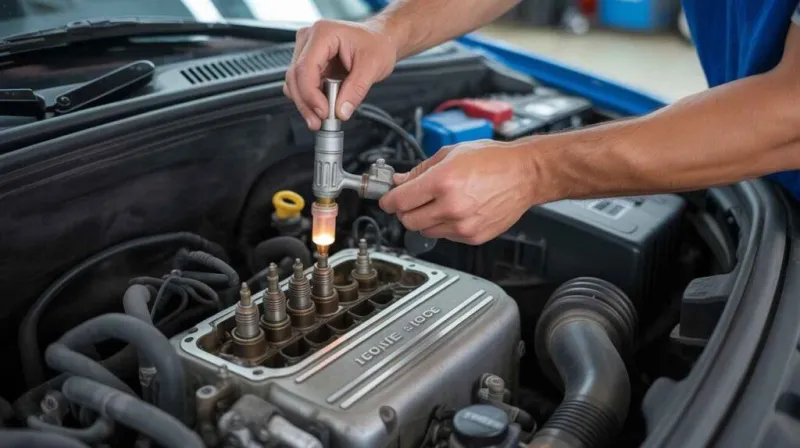
Photo: mechanic smelling car engine bay checking for fuel leak, via carsrepairshub.blog
You've probably caught a whiff of something off near your car or truck and just... ignored it. Maybe it was faint, maybe it went away after a few minutes, and maybe life was too busy to deal with it. But here's the thing: your fuel system has a surprisingly expressive vocabulary, and most of it comes through your nose.
Odors are one of the earliest warning signs that something in your fuel system is heading south. The tricky part is knowing which smells are just quirks of normal operation and which ones are telling you to pull over immediately and call a mechanic. Let's break it down.
Why Your Fuel System Smells in the First Place
Gasoline is a complex cocktail of hydrocarbons, and it naturally carries a distinctive smell. Some odor near the fuel filler cap or immediately after a fill-up is completely normal. What you're sniffing for is anything that doesn't match that familiar baseline — smells that are stronger than usual, smells that linger, or smells that are just plain different.
Your fuel system involves a lot of components: the tank itself, the fuel lines, injectors or a carburetor, the filler neck, the fuel pump, and the evaporative emission control (EVAP) system. Any one of these can be the source of an unusual odor, and the character of the smell usually points toward which part is misbehaving.
The Rotten Egg Smell: Sulfur and What It Means
This is the one that gets people the most alarmed — and honestly, it should get your attention. A rotten egg or sulfur smell coming from your exhaust typically points to a problem with your catalytic converter. When your engine runs too rich (burning excess fuel), unburned sulfur compounds pass through the exhaust system without being properly converted, and that's what hits your nose.
But here's the fuel-system angle most people miss: a failing fuel pressure regulator or clogged fuel injectors can cause that rich-running condition in the first place. If you're smelling rotten eggs, don't just assume it's a converter problem and move on. Get your fuel trims checked. If the root cause is a fuel delivery issue, replacing the converter without fixing the underlying problem is just an expensive bandage.
Older vehicles running high-sulfur fuel can also produce this smell occasionally, but it's less common with modern US pump gasoline.
Raw Gasoline Smell: The One That Demands Respect
A strong, raw gasoline odor — especially one that persists after the engine has warmed up — is never something to shrug off. This can signal several things:
A fuel leak somewhere in the system. Check under the vehicle after it's been parked for a few minutes. Any wet spots or staining near the fuel lines, fuel filter, or underneath the tank itself are red flags. Even a slow drip is a fire hazard, full stop.
A failing fuel cap or loose filler neck seal. Sometimes the fix is embarrassingly simple — a cracked or poorly seating gas cap lets vapors escape. If your check engine light is also on with a code related to the EVAP system, start here before anything else.
A saturated charcoal canister. Your EVAP system uses a charcoal canister to capture fuel vapors and route them back into the engine. When that canister gets oversaturated — often from repeatedly topping off the tank past the auto-shutoff — it can vent raw fuel smell into the engine bay or cabin.
If the smell is coming from inside the car, treat it as urgent. Gasoline vapors are heavier than air and can accumulate in an enclosed vehicle to dangerous concentrations.
That Sweet, Almost Candy-Like Smell
Wait — sweet? Yes, actually. If you're noticing something that smells almost pleasant but chemical, like a faint butterscotch or solvent-y sweetness, you might be dealing with a coolant leak rather than a fuel issue. Coolant contains ethylene glycol, which has a distinctly sweet odor.
This matters for fuel system health because coolant can contaminate oil and, in some engine configurations, find its way into the intake. If you smell something sweet near the engine bay and your coolant level keeps dropping, get it checked before it becomes an overheating or engine damage situation.
Burning Smell After Parking: Normal or Not?
A mild burning smell immediately after parking a hot engine is often just normal — oil or dust burning off exhaust components. But if the burning smell is persistent, stronger than usual, or has a sharp acrid quality, it could mean fuel is dripping onto a hot surface somewhere.
This is especially worth watching on older trucks and vehicles with higher mileage, where fuel line connections and rubber hoses can deteriorate and weep small amounts of fuel. The danger isn't just the smell — it's the fire risk when fuel contacts a hot exhaust manifold or catalytic converter.
When to Handle It Yourself vs. When to Call a Pro
Here's a quick gut-check guide:
DIY-friendly situations:
- Faint gas smell that goes away after driving? Check and replace the gas cap.
- Mild sulfur smell only at startup that clears up? Could be normal catalytic converter warm-up behavior on a cold morning.
- Smell near the filler neck after a fill-up? Likely just spillage — wipe it down and monitor.
Time to see a mechanic:
- Any raw gasoline smell that persists while driving or parked.
- Rotten egg smell that doesn't go away or is accompanied by rough running.
- Any smell coming from inside the cabin, especially with dizziness or headache (ventilate immediately and get out of the vehicle).
- Burning smell that intensifies rather than fading after parking.
Your nose isn't infallible, but it's always on duty. The next time something smells off around your vehicle, don't just crack a window and hope it goes away. Give it a minute of real attention — because catching a fuel system issue by smell is a whole lot cheaper than catching it after a breakdown on the side of I-70.