The Overlooked Weak Link in Your Fuel System: What a Worn Filler Neck Is Actually Doing to Your Tank
You've probably replaced fuel filters, swapped out pumps, and maybe even had a tank cleaned. But when's the last time anyone looked at your filler neck — the tube that runs from your gas cap down into the tank itself? If your answer is "never," you're not alone. This component gets almost zero attention in typical maintenance conversations, and that oversight has a way of turning into expensive surprises down the road.
At Top Tank Up, we spend a lot of time thinking about the full picture of fuel system health. And the filler neck sits at the very beginning of that picture — which means problems here affect everything downstream.
What the Filler Neck Actually Does (And Why It Matters More Than You Think)
The filler neck is basically the gateway between the outside world and your fuel tank. It routes fuel from the pump nozzle into the tank, seals against vapor escape, and in most modern vehicles, it's part of your evaporative emissions system (EVAP). That last part matters because your EVAP system is tightly connected to fuel pressure regulation, vapor management, and ultimately, how cleanly and efficiently your engine runs.
OEM filler necks — the ones that came with your truck or car from the factory — are typically made from either steel or a reinforced rubber/plastic composite. Steel versions are prone to rust, especially on vehicles driven in northern states where road salt is a winter staple. Composite versions can crack, stiffen, or delaminate over time, particularly when exposed to the ethanol blends that dominate most US pump fuel today.
The problem is that neither type fails dramatically. They degrade slowly, quietly, and in ways that look like symptoms of other problems entirely.
Fuel Slosh, Vapor Lock, and Contamination — All Starting at the Neck
Here's where things get interesting. A filler neck that's partially collapsed, kinked, or corroded internally creates a restriction in the fill path. When you're pumping gas, this shows up as the pump nozzle clicking off early — sometimes repeatedly — as if your tank is full when it isn't. Most people blame the pump or the nozzle. The actual culprit is often a filler neck that's no longer venting properly, creating back-pressure that tricks the auto-shutoff sensor.
Beyond fill-up frustration, a compromised filler neck can contribute to fuel slosh — the movement of fuel inside the tank during acceleration, braking, and cornering. A healthy filler neck helps stabilize the fuel column during fill-up and maintains a consistent seal. When that seal degrades, air pockets and pressure imbalances develop inside the tank. Over time, this contributes to inconsistent fuel delivery, especially noticeable at low tank levels.
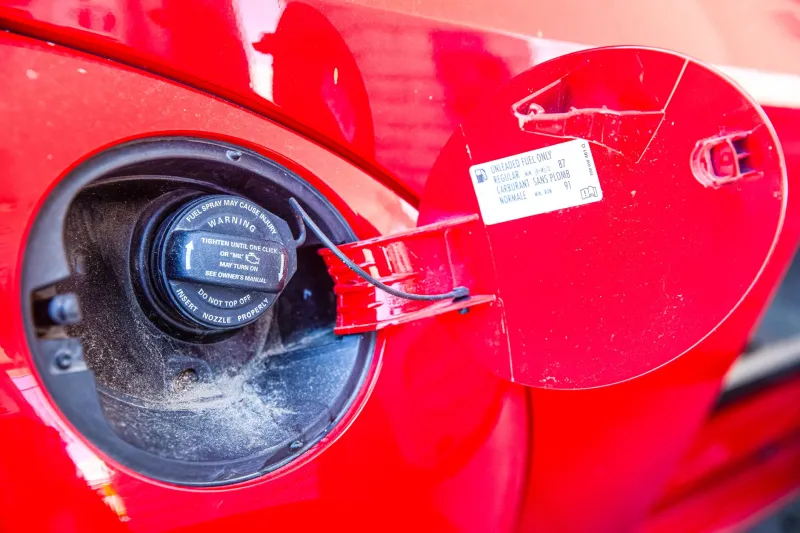
Vapor lock is another sneaky consequence. If your filler neck isn't sealing correctly at the cap end or has developed cracks along its length, fuel vapors escape before they reach the EVAP canister. Your engine management system may flag this as an EVAP leak — often triggering that dreaded Check Engine light with codes like P0455 or P0457. Mechanics who don't think to inspect the filler neck first will sometimes replace the gas cap (a reasonable first guess) and then move on to the EVAP canister or purge valve. If the neck is the actual problem, none of those fixes stick.
And then there's contamination. A filler neck with internal corrosion or delaminating composite material is actively shedding particles into your fuel supply every time you fill up. Those particles don't always get caught by the fuel filter — particularly if they're small enough to pass through but large enough to cause wear on fuel injectors, pump components, and fuel pressure regulators over tens of thousands of miles.
The Signs You Should Actually Be Looking For
Because filler neck failure is gradual, the warning signs are easy to dismiss or misattribute. Here's what to watch for:
- Pump nozzle clicking off early or repeatedly during fill-ups, even when the tank isn't close to full
- A persistent fuel smell near the rear of the vehicle, especially after filling up — this suggests vapor is escaping somewhere along the neck
- A Check Engine light with EVAP-related codes that don't resolve after replacing the gas cap
- Visible rust, cracks, or soft spots on the filler neck if you crawl under the vehicle and take a look — particularly on trucks and older SUVs where the neck is more exposed
- Discoloration or flaking inside the filler tube when you shine a light in — a sign of internal corrosion or delamination
If you've got a high-mileage truck — especially anything north of 100,000 miles that's been driven in a rust-belt state — a visual inspection of the filler neck should be part of your regular maintenance checklist. It takes about three minutes.
OEM vs. Aftermarket: Is an Upgrade Actually Worth It?
If your filler neck needs replacing, you've got a choice to make. OEM replacements are reliable and designed to spec, but they're often made from the same materials that caused the original problem. Aftermarket options — particularly stainless steel or high-grade reinforced composite necks — offer better corrosion resistance and longer service life, especially for trucks used in harsh conditions or for towing and hauling.
For most passenger cars in mild climates, an OEM replacement is perfectly fine. But if you're running a work truck, a diesel pickup, or a vehicle that regularly sees mud, salt, or extended idle time, investing in a higher-quality filler neck is legitimate preventive maintenance. The cost difference is usually modest — often $30 to $100 more than the base OEM part — and the payoff in avoided downstream repairs can be substantial.
Don't Let a $50 Part Cause a $500 Problem
The filler neck is one of those components that sits at the intersection of fuel containment, vapor management, and contamination prevention. When it's working, you never think about it. When it's not, you end up chasing symptoms through half your fuel system before someone finally looks in the right place.
Next time your truck's in for service — or the next time you're doing a DIY inspection — add the filler neck to your checklist. A quick look and a squeeze of the hose can tell you a lot. And if it's been more than a decade or 100,000 miles, it might just be time to swap it out as routine maintenance rather than waiting for it to announce itself with a Check Engine light and a fuel smell you can't explain.
At Top Tank Up, we're big believers in treating the full fuel system as a connected whole. The tank, the pump, the filter, the injectors — they're only as good as the path that feeds them. And that path starts at the filler neck.